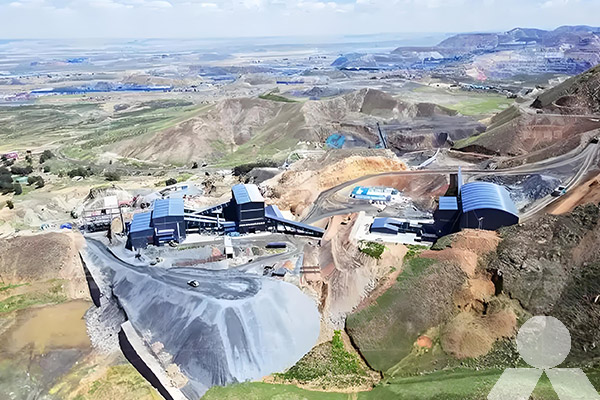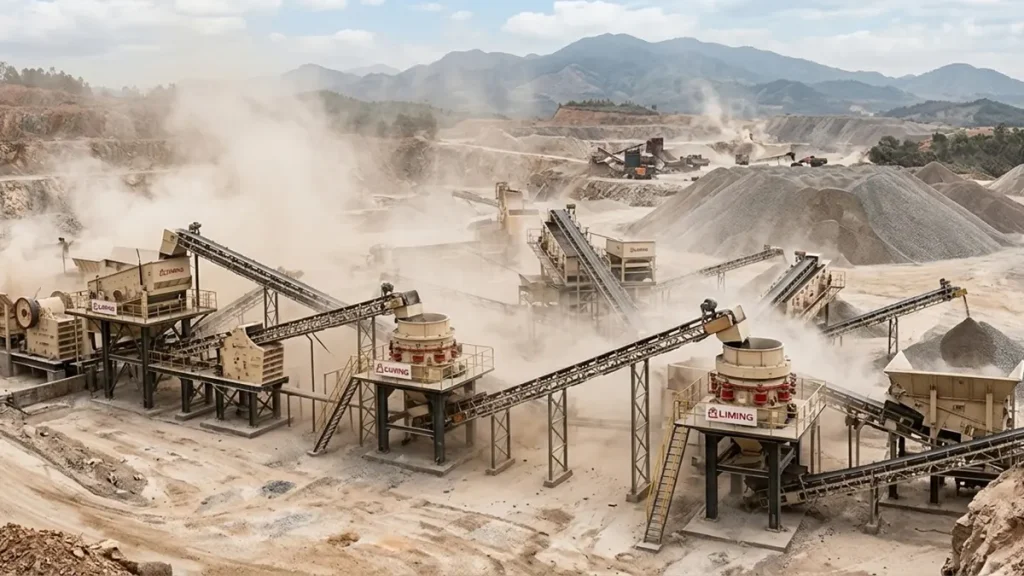
I inspected a settling pond last quarter; the delta forming at the discharge pipe was composed entirely of clean, 0.16mm silica. Without a hydrocyclone recovery unit, the plant was actively burying premium glass-grade sand under layers of useless clay, destroying their daily revenue model.
Evaluating the benefits and costs of a silica sand washing plant requires looking beyond the initial hardware price. Operating an open-circuit washing system in modern aggregate production guarantees massive water waste and the loss of high-value fine sand. By architecting a closed-loop hydro-system utilizing XSD wheel washers, hydrocyclones, and filter presses, plant designers can achieve a 90% water recycling rate. This zero-discharge configuration strictly meets environmental compliance while directly accelerating capital payback velocity by converting wastewater sludge into sellable fine aggregate.
Architecting Zero-Discharge Circuits: A Technical Evaluation of Silica Washing Benefits and Costs
Relying on massive evaporation ponds to manage aggregate wastewater is an unsustainable architectural flaw. During a site evaluation at a high-capacity silica facility in the arid Nevada desert this January 2026, the operational vulnerability was stark. The plant was pumping thousands of gallons of fresh groundwater daily, while up to 15% of their premium fine sand was being flushed out as waste sludge. Deciphering The Ultimate Guide to Silica Sand Washing Plant Equipment Benefits and Costs requires a strict focus on hydro-dynamics. A modern silica washing circuit must be engineered as a closed-loop system. The true benefit of advanced washing architecture is not merely clean sand; it is the absolute elimination of liquid discharge and the recovery of microscopic revenue.
Hydro-Purification: The Role of the Wheel Washer
Mechanical simplicity dictates the baseline utility draw of the washing phase.
The primary objective of the washing stage is to separate the -200 mesh rock dust (silt and clay) from the 0-5mm manufactured silica sand. Integrating an XSD3220 wheel washer accomplishes this with maximum volumetric efficiency. As the heavy silica slurry enters the washing tank, the impeller slowly rotates. The buckets lift the clean, heavy aggregate out of the water bath, allowing the moisture to drain, while the lighter silt remains suspended in the overflow.
The operational cost advantage here is found in the power metrics. The XSD3220 executes this separation while drawing only 15 kW of electrical power. Compared to legacy dual-spiral washers that generate immense frictional drag, the wheel washer drastically lowers the electrical expenditure per shift, preserving the production-to-cost ratio while delivering concrete-compliant clean sand.
Fine Sand Recovery: Liquidating Volumetric Loss
Standard washing equipment inherently possesses a critical flaw: the overflow water carries away highly valuable fine sand particles along with the unwanted silt. This is a direct hemorrhage of liquid assets. Architecting a complete system requires the integration of a fine sand recovery unit directly downstream from the wheel washer.
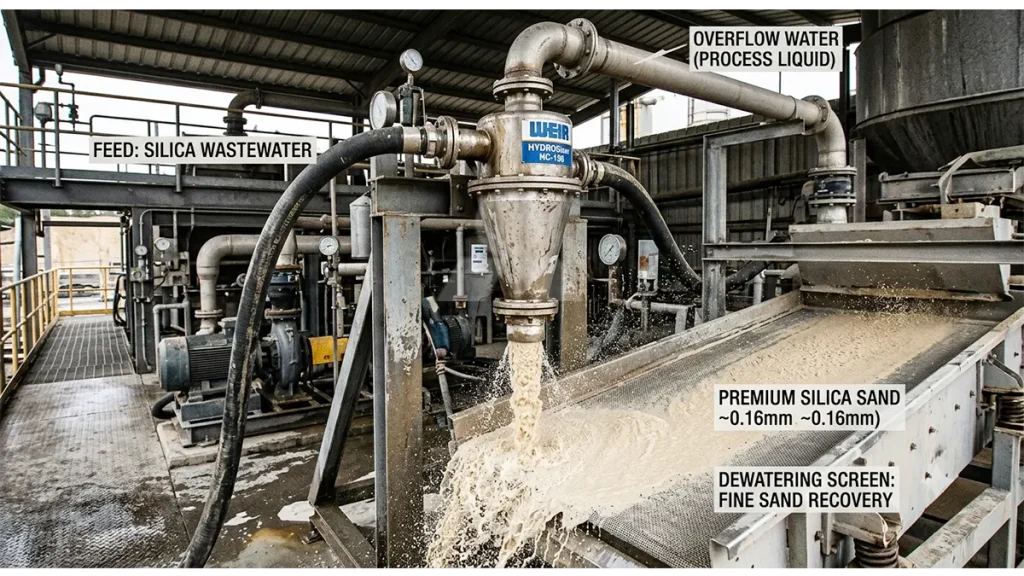
The recovery unit utilizes a high-pressure slurry pump to force the wastewater into a polyurethane hydrocyclone. The centrifugal force separates the heavier 0.16mm silica particles from the muddy water, discharging the recovered fines onto a high-frequency dewatering screen. By capturing up to 15% of the volumetric yield that traditional plants discard, this single piece of equipment violently accelerates the asset amortization cycle.
Synchronized Configuration Matrix for Zero-Discharge
A flow chart is merely a theory until backed by rigid hydro-mechanical tolerances.
| Process Stage | Recommended Equipment | Operational Capacity | Power / Utility Draw | Architectural Benefit |
|---|---|---|---|---|
| Primary Washing | XSD3220 Wheel Washer | 60-150 tph | 15 kW | Low-power silt separation |
| Yield Recovery | Hydrocyclone Unit | Matched to Overflow | Slurry Pump Driven | Captures 0.16mm lost fines |
| Water Clarification | Deep-Cone Thickener | Custom Sizing | Flocculant Dosing | Accelerates mud settling |
| Sludge Solidification | High-Pressure Filter Press | Matched to Sludge | Hydraulic Drive | Achieves 90% water recycling |
The synergy between the recovery hydrocyclone and the thickener is absolute. Once the valuable fines are extracted, the remaining muddy water must be neutralized. Sending this directly to the environment violates modern green mining protocols.
The Zero-Discharge Mandate: Thickeners and Filter Presses
Operating a silica plant in water-scarce regions or under strict environmental jurisdictions requires the total elimination of liquid discharge. The final stages of the washing architecture secure this compliance. The muddy wastewater is routed into a deep-cone thickener, where a precise dosing of flocculant causes the suspended clay particles to bind together and sink rapidly.
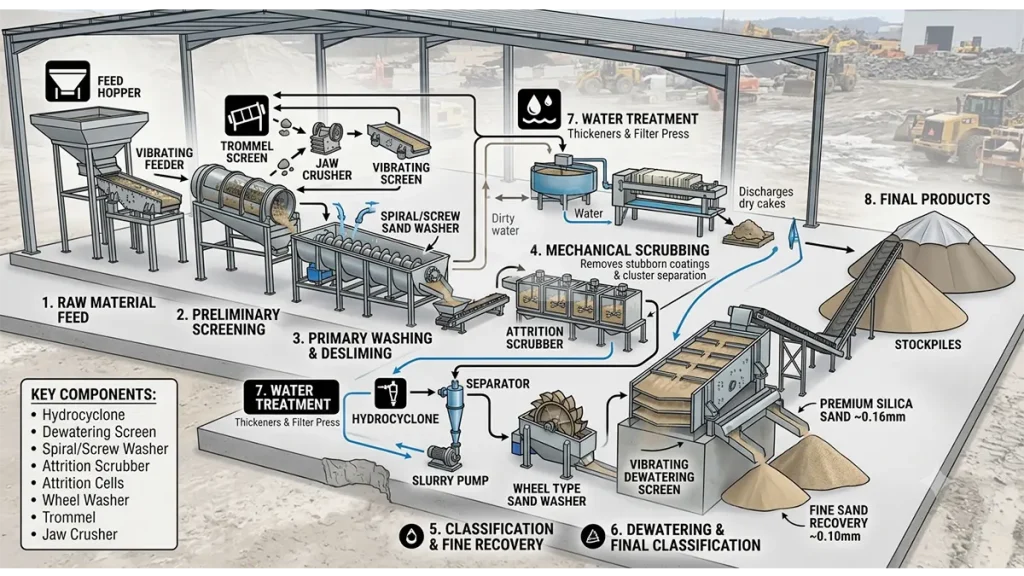
The clean overflow water from the top of the thickener is immediately pumped back to the XSD washer. The concentrated sludge at the bottom is pumped into a high-pressure filter press. This machine compresses the sludge, squeezing out the remaining moisture and creating dry, stackable mud cakes. This closed-loop system achieves a 90% industrial water recycling rate, completely eliminating the need for massive, environmentally hazardous excavation pits and safeguarding the plant from regulatory shutdown.
Hydro-Separation Diagnostics & Silt Settling Post-Mortem
Decades ago, environmental regulations were lax, and land for settling ponds was cheap. The upfront equipment price of a filter press seemed unnecessary. Today, the cost of acquiring water permits and the threat of ecological fines make the filter press the most critical risk-mitigation asset on the balance sheet.
Do not surge the impeller. Operating the wheel washer at an excessive RPM creates turbulence in the settling bath. This turbulence prevents the heavy silica from sinking into the lifting buckets, inadvertently flushing sellable product out with the wastewater overflow.
Calculating the settling velocity proves that raw clay particles can take days to sink natively. Precision dosing of polymer flocculants binds these micro-particles into large, heavy flocs that settle in minutes. If the dosing is improperly calibrated, the thickener overflows with muddy water, contaminating the entire closed-loop recycling system.
Enforce Closed-Loop Architecture to Accelerate Payback
An industrial silica washing facility must function as a self-contained hydro-system. Analyzing The Ultimate Guide to Silica Sand Washing Plant Equipment Benefits and Costs proves that attempting to operate an open-circuit plant guarantees severe financial attrition through water loss and regulatory non-compliance. Next month, if you continue to flush your premium 0.16mm fine sand into a settling pond, you are voluntarily surrendering your profit margins. Architect a zero-discharge circuit, integrate fine sand recovery, and secure your capital payback velocity immediately.