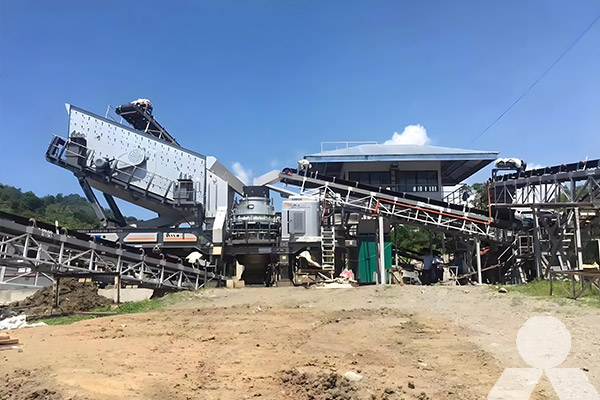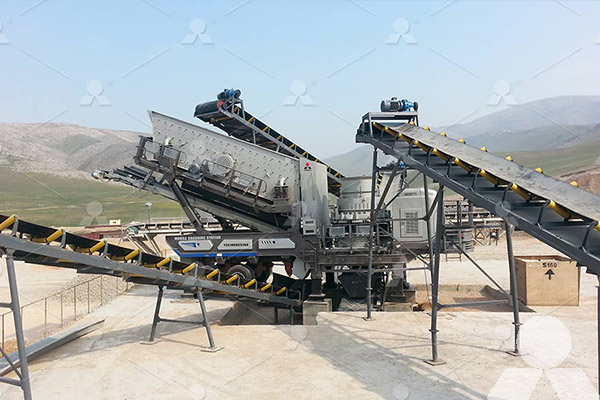
I inspected a site last month utilizing a massive primary jaw designed for 600 tph to feed a strict 300 tph secondary circuit. The primary was idling for minutes at a time. The operator had paid a massive premium for unused volumetric capacity, tying up capital that should have been deployed into fine-sand recovery systems.
Evaluating the Factors Influencing Stone Crusher Price in South Africa requires looking beyond the initial quotation. The true cost of a plant is dictated by geological alignment and deployment mechanics. Deploying budget impactors on high-silica South African quartzite guarantees an unsustainable expenditure per shift. Conversely, while axle-mounted NK mobile plants carry a higher upfront equipment price, they eliminate the exorbitant civil engineering costs of stationary foundations. Strategically selecting dual-power mobile units and HPT hydraulic cones neutralizes grid instability and accelerates capital payback velocity.
Architecting the Investment: Factors Influencing Stone Crusher Price in South Africa
Evaluating procurement documents for a new aggregate quarry near Johannesburg this July 2025 revealed a dangerous industry disconnect regarding heavy machinery valuation. The contractor possessed three vastly different quotations for a 300 tph circuit. One supplier quoted massive stationary machinery requiring extensive concrete work, while another quoted lightweight impactors to artificially drop the initial sticker price. Both architectures were financial traps. Understanding the Factors Influencing Stone Crusher Price in South Africa requires a strict analysis of mass balance, geological abrasion, and localized infrastructural challenges. You must deploy machines that operate at their peak efficiency curve on specific African rock types, balancing the kinetic force required to fracture hard silica against the localized costs of power and civil deployment.
Geological Alignment: The Cost of Silica Abrasion
A low upfront equipment price on abrasive rock guarantees an uncontrolled expenditure per shift.
South African geology is notoriously demanding, frequently featuring high-silica quartzite and abrasive gold-bearing ores. The secondary crushing stage is where naive buyers sabotage their own operations. If a supplier artificially lowers the plant price by quoting a horizontal impact crusher for these materials, reject the proposal immediately. The abrasive silica will vaporize the high-chrome blow bars within 48 hours, shifting your financial burden from the initial purchase to a devastating daily consumable overhead.
The architectural mandate for this geology is the HPT300 multi-cylinder hydraulic cone crusher. Utilizing 250 kW of power, the HPT300 executes laminated crushing, forcing the abrasive rocks to fracture against each other in a dense bed. This physical transfer of destructive energy away from the machine’s wear parts requires a higher initial investment but drastically reduces the daily consumable overhead, ensuring the asset amortization cycle remains highly profitable.
Stationary Concrete vs. Axle-Mounted Mobility
The physical deployment method is a massive price variable. A 300 tph stationary plant requires up to 45 days of site grading, concrete foundation curing, and heavy steel erection. In South Africa, the exorbitant local labor rates and the cost of civil engineering for these subterranean foundations often exceed the perceived savings of buying a stationary setup.
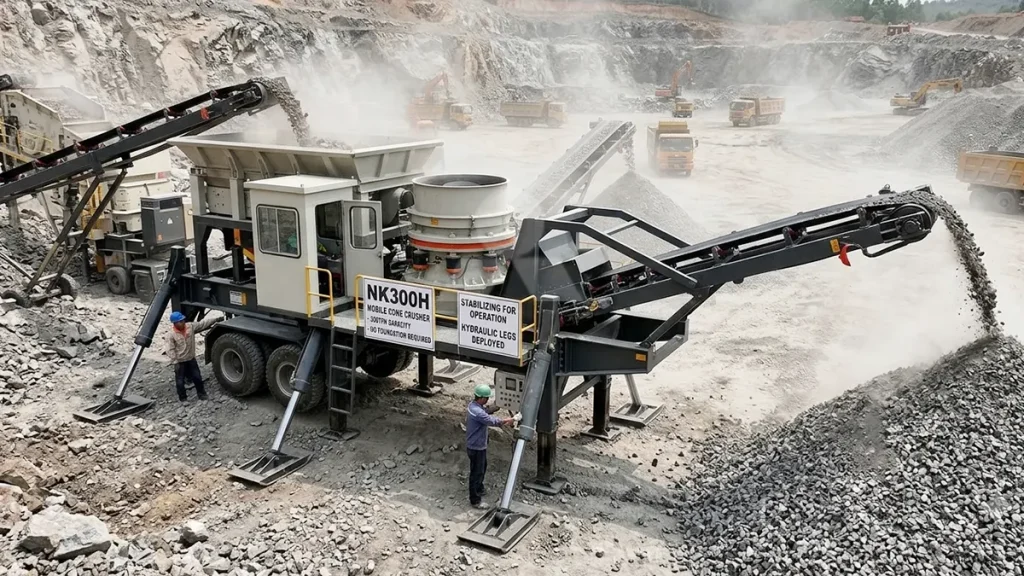
Contrast this with the NK300H wheeled mobile crusher. While the upfront equipment price of a mobile chassis is intrinsically higher due to the integrated axles, hydraulic leveling legs, and onboard electrical panels, it completely erases the month of dead time waiting for concrete to dry. By initiating production on day two, the mobile unit accelerates capital payback velocity and preserves its relocation value for future contracts.
Grid Instability and the Dual-Power Premium
Powering the kinetic drive dictates the operational survival of the plant.
| System Configuration | Representative Model | Power Source | Deployment Cost Factor | Architectural Justification |
|---|---|---|---|---|
| Stationary Fixed Plant | PEW860 / HPT300 | Grid Only | High Civil Sunk Costs | Long-term (>10 year) mega-quarries |
| Pneumatic Mobile | NK300H Cone | Grid or External Gen-Set | Zero Concrete Costs | Highway towing, rapid multi-site deployment |
| Tracked Mobile (Diesel) | VTJ1180 Jaw | Diesel Hydraulic | High Consumable Fuel | Extreme off-road blast face mobility |
| Tracked Mobile (Dual) | VTJ1180DP Jaw | Diesel / Electric Plug-in | Premium Initial Price | Neutralizes load-shedding grid instability |
The localized reality of South Africa’s grid load-shedding protocols forces a specific architectural choice. Dual-power track-mounted variants (like the VTJ1180DP) carry a premium upfront price. However, they mathematically neutralize severe operational losses by allowing the plant to tram into position using diesel hydraulics, and then plug into a localized generator or active grid to perform the 250 kW crushing work electrically, insulating the production-to-cost ratio from diesel price volatility.
Closed-Circuit Integration and Logistical Footprints
A frequent blind spot in analyzing plant prices is the connective infrastructure. A sprawling layout requires hundreds of meters of external belt conveyors, which artificially inflates the steel tonnage and motor sizing of the quotation. Furthermore, a linear flow chart without closed-circuit screening renders the final top-size uncontrollable, producing aggregate that is unsellable for high-grade structural concrete.
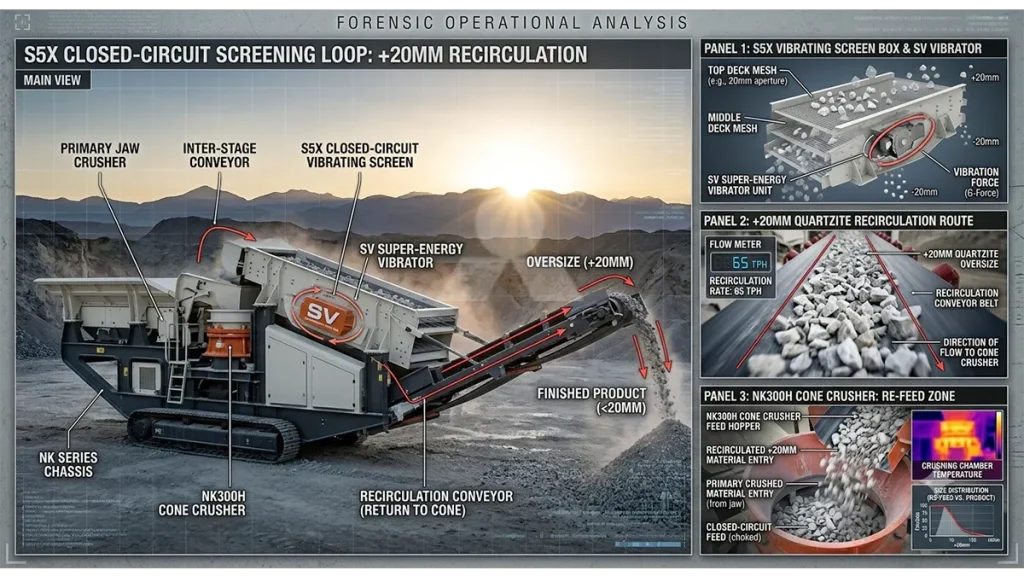
Integrating the S5X closed-circuit vibrating screen directly onto the chassis of the NK300H mobile plant creates a self-contained loop. By physically returning any +20mm oversize rock back to the cone crusher via a dedicated onboard return conveyor, the system enforces a strict 0-20mm aggregate grading without requiring external conveyor infrastructure. Shrinking the required plant footprint drastically lowers both the initial quotation and the logistical deployment costs across the African continent.
Volumetric Discrepancy Diagnostics & Sunk Cost Post-Mortem
A decade ago, suppliers used cheap PYB spring cones to hit lower price points on competitive bids. When 200 MPa South African quartzite hit those springs, they fatigued instantly, causing the bowl to jump and ruining the final aggregate sizing. The modern HPT hydraulic series maintains absolute rigidity.
Do not ignore the deployment gap. A fixed plant might quote 20% cheaper upfront, but the 45 days of lost production revenue while waiting for civil engineering to finish—combined with the inability to relocate the asset when the quarry depletes—will eclipse that 20% savings within the first operating quarter.
During scheduled load-shedding, a pure-electric plant goes dark, freezing revenue. A dual-power tracked jaw can immediately switch to its onboard diesel generator to maintain the primary volumetric flow, ensuring the downstream surge bins remain full and ready for when grid power returns.
Align Your Architecture to the Geological Reality
An industrial crushing circuit cannot be optimized by chasing the lowest quotation; it must be governed by strict mass balance blueprints aligned to the local geography. Evaluating the Factors Influencing Stone Crusher Price in South Africa requires stripping away bloated specifications and rejecting chemically mismatched equipment. If you attempt to process abrasive quartzite with an impactor or fail to account for the exorbitant costs of stationary concrete foundations, your expenditure per shift will hemorrhage. Architect your mass balance with exact precision, deploy strategic mobility, and secure your capital payback velocity immediately.