I inspected a fractured side plate last quarter; the root cause was simple. One of the four isolation springs had collapsed by 15mm. This forced the 30 kW motor to drive the screen box at a diagonal tilt, creating a twisting motion (torsion) that violently tore the steel weldments apart. Always audit spring symmetry.
Understanding How to Maintain a Vibrating Screen? is the ultimate defense against plant-wide volumetric bottlenecks. The vibrating screen acts as the absolute gatekeeper of aggregate quality. Neglecting exciter bearing thermals, ignoring asymmetrical spring wear, or executing loaded shutdowns guarantees catastrophic mechanical failure. By enforcing strict daily inspection protocols, calibrating eccentric strokes for high-moisture feeds, and preventing localized lateral torsion, site operators can completely eliminate non-planned downtime and drastically reduce the daily expenditure per shift.
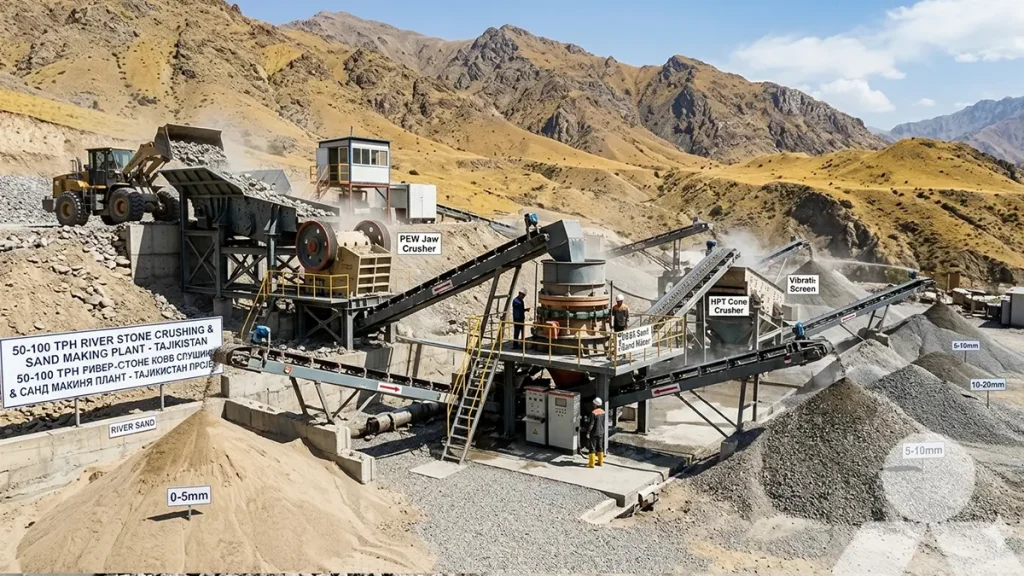
The vibrating screen is the heartbeat of the aggregate production line. During a site evaluation at a high-capacity basalt quarry in Brazil this September 2025, the entire 400 tph circuit was forced to shut down. The primary jaw and secondary cone crushers were functioning perfectly, but the secondary screen had suffered a catastrophic bearing seizure. The operators had neglected the foundational rules of kinetic maintenance. A screen dictates the final geometry and quality of the product; if it fails, the plant produces nothing but unsellable mixed rock. Mastering How to Maintain a Vibrating Screen? requires shifting from reactive repairs to predictive, data-driven protocols. By strictly monitoring thermal outputs, spring symmetry, and mesh blinding, site leads can secure the mass balance of the entire facility and fiercely protect the hardware amortization cycle.
Exciter Bearing Diagnostics and Lubrication
The exciter bearing is the mechanical core of the screening circuit. Thermal management is non-negotiable.
The vibratory exciter subjects its internal bearings to immense, continuous centrifugal force. The operational baseline for these bearings dictates that temperatures must never exceed 75°C. A common, yet fatal, mistake made by inexperienced maintenance crews is over-lubrication. Injecting excessive grease into the labyrinth seals does not improve performance; it creates severe thermal retention. The grease churns, trapping heat within the housing, leading to rapid bearing seizure and immediate plant paralysis.
Lubrication must be executed with surgical precision. Utilizing automated lubrication systems or strictly adhering to OEM-specified grease volumes (measured in exact grams per operating hour) ensures the bearings maintain a protective hydrodynamic film without retaining destructive heat. Routine infrared thermal scanning is the most effective diagnostic tool to monitor this baseline.
Combating Screen Blinding in High-Moisture Feeds
Processing aggregates with a moisture content exceeding 8% introduces a severe environmental variable. Wet clay and silica dust adhere to the steel mesh, gradually restricting the aperture. This phenomenon, known as “peg-blinding,” prevents the designated aggregate fraction from falling through. Consequently, the finished product rides over the deck, artificially spiking the recirculating load and choking the upstream secondary crushers.
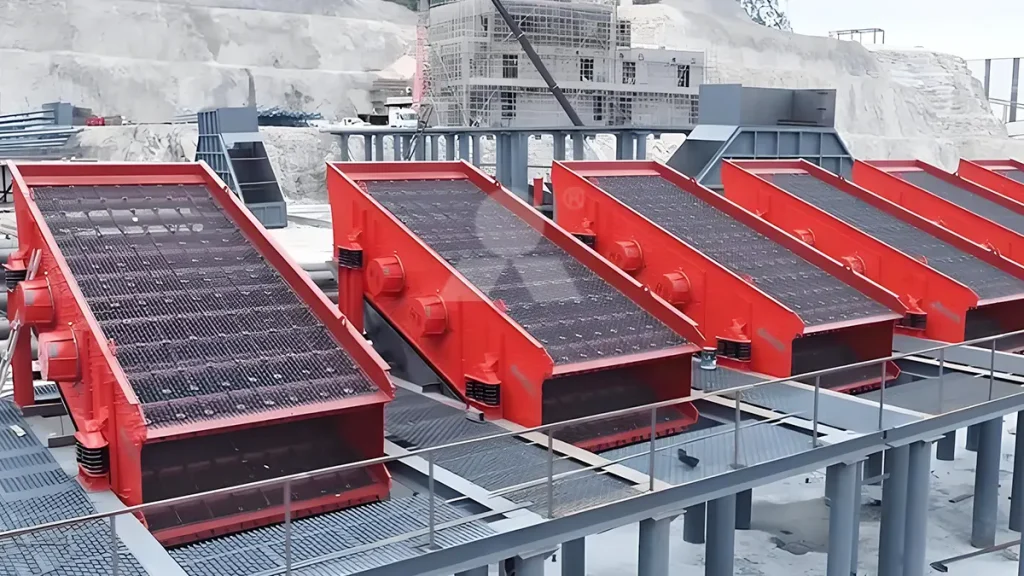
To mitigate this, operators must adjust the kinetic parameters of the machine. Increasing the eccentric stroke amplitude helps dislodge wedged particles. Furthermore, upgrading to self-cleaning polyurethane or rubber mesh panels drastically reduces surface adhesion. Keeping the mesh open is mathematically imperative to maintaining the plant’s production-to-cost ratio.
Synchronized Maintenance Matrix for S5X Screens
A preventative maintenance schedule is the only reliable method to eliminate non-planned downtime.
| Inspection Interval | Component | Diagnostic Action | Risk of Failure |
|---|---|---|---|
| Daily (Pre-Shift) | Screen Mesh & Decks | Inspect for blinding, pegging, and tension loss | Cross-contamination of aggregate grades |
| Daily (Operational) | Exciter Bearings | Verify temperature remains strictly < 75°C | Thermal bearing seizure |
| Weekly | V-Belts & Drive | Measure tension and check for pulley alignment | Kinetic slippage and RPM drop |
| Monthly | Isolation Springs | Measure uncompressed height for symmetrical wear | Lateral torsion fracturing side plates |
The isolation springs act as the structural suspension of the entire chassis. A monthly audit of their height ensures the machine vibrates uniformly, preventing catastrophic sheer stress on the mainframe.
S5X2460-3 Screen: Operational & Kinematic Thresholds
- Maximum Bearing Temperature: Locked at 75°C (Action required at 65°C)
- V-Belt Tension Variance: Strictly < 2% deviation allowed
- Spring Compression Symmetry: Maximum 3mm height differential across 4 points
- Lubrication Protocol: Exact gram dosage via automated centralized system
- Operational Amplitude: Calibrated based on feed moisture (>8% requires adjustment)
Start/Stop Protocols and Structural Integrity
The operational logic applied to starting and stopping the machine is just as critical as its physical lubrication. Executing a “loaded shutdown” is a fatal operational error. If an emergency or operator negligence causes the S5X screen to stop while the deck is buried under 5 tons of rock, restarting the machine becomes a massive liability.
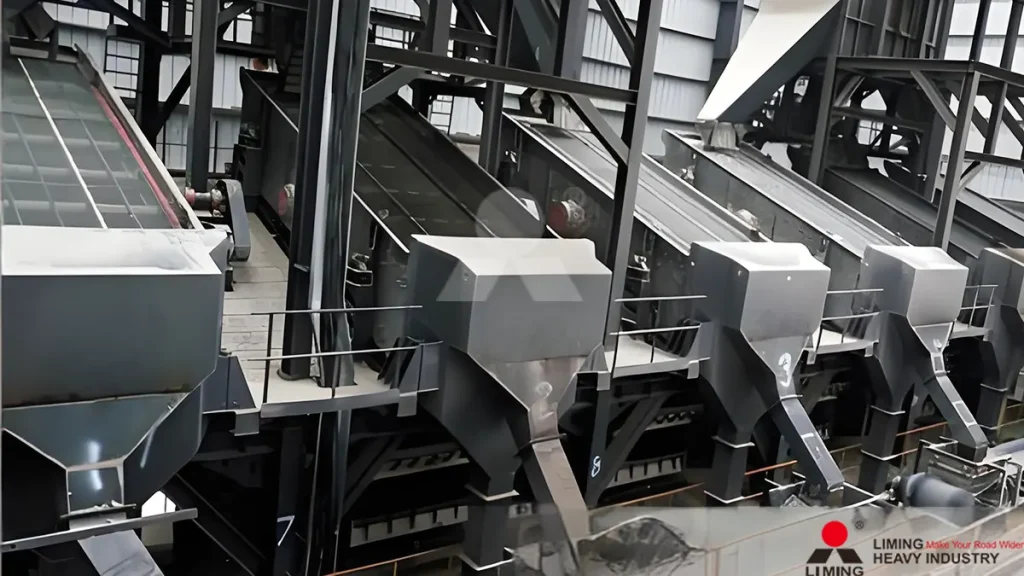
Attempting to jump-start the eccentric shaft under a static load exerts catastrophic sheer force on the V-belts and the motor shaft. The correct protocol mandates that the upstream feed conveyor is halted first. The screen must run empty for at least 60 seconds to completely clear the deck before the main power is cut. This strict sequencing protects the electrical switchgear from massive amp spikes and preserves the mechanical integrity of the drive train.
Kinetic Vibration Diagnostics & Screen Post-Mortem
Decades ago, operators failed to properly tension the wire cloth across the cambered deck. A loose mesh acts like a whip; it flaps independently from the screen box frame. This secondary vibration rapidly induces metal fatigue, snapping the wires and allowing oversized rock to contaminate the final product.
Altering the amplitude of the screen requires rotating the eccentric weights. If an operator adjusts the left side to 50% and leaves the right side at 70%, the unbalanced centrifugal force will instantly destroy the exciter bearings upon startup. Absolute mechanical symmetry is the law.
If the V-belts are under-tensioned, the motor runs at full speed but the belts slip on the sheave. This causes the screen RPM to drop below the threshold required to properly stratify the material bed. The fines remain trapped beneath the larger rocks, bypassing the mesh entirely and ruining the sizing accuracy.
Enforce Maintenance Protocols to Accelerate Amortization
An aggregate screen is a precision instrument operating in a brutally abrasive environment. Understanding How to Maintain a Vibrating Screen? requires enforcing strict, data-driven diagnostic protocols. If you allow your operators to over-grease bearings, ignore blinded meshes, or perform loaded shutdowns, your expenditure per shift will hemorrhage through preventable mechanical failures. Implement symmetric spring audits, manage your thermal baselines, and secure your capital payback velocity by ensuring your screening circuit operates flawlessly.