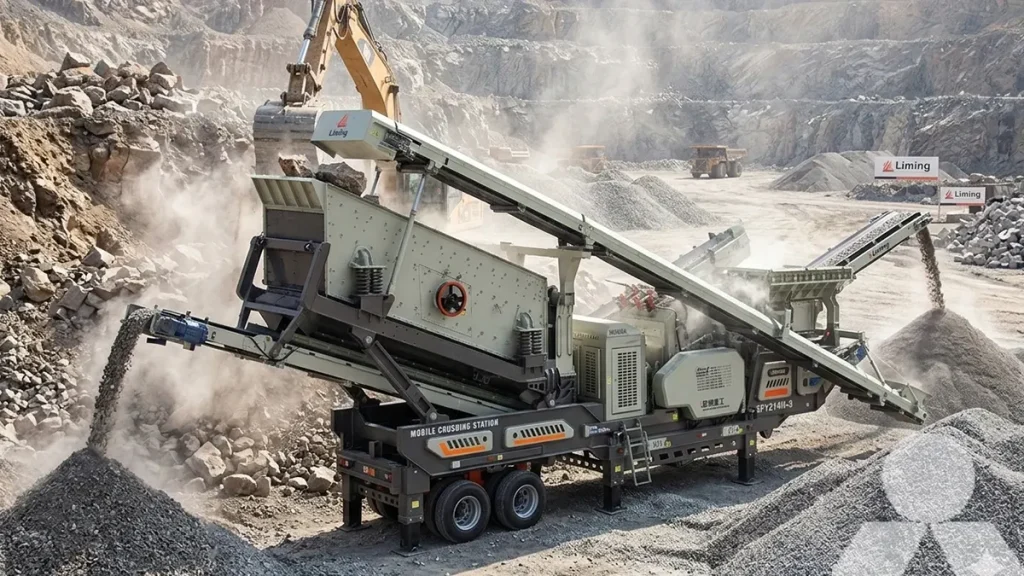
I have spent the better part of my engineering career standing on dusty demolition sites, watching excavators tear down old concrete structures. If there is one thing I have learned, it is that construction waste is an entirely different beast compared to virgin quarry rock. You are not just dealing with stone; you are dealing with a messy mix of concrete slabs, bricks, asphalt, and the absolute worst enemy of any crushing chamber: tangled steel rebar.
When contractors ask me how to process this material efficiently without destroying their profit margins through high running costs and constant maintenance, my answer is always to keep the equipment on wheels or tracks. A mobile crushing plant for construction waste recycling changes the entire game. You bring the machine to the rubble, not the rubble to the machine. It eliminates the massive trucking fees associated with hauling waste to a landfill.
The Engineering Challenge: Concrete and Steel
Let’s talk about what actually happens inside the machine. A lot of folks think they can just throw an old cone crusher at demolition waste. That is a massive mistake. Cone crushers work by squeezing rock. If a piece of half-inch steel rebar gets caught in a cone, it will wrap around the mantle, jam the chamber, and you will spend the next two days cutting it out with a blowtorch.
For recycling, you need an impact crusher. Impactors hit the material violently. When a piece of reinforced concrete enters an impact chamber, the blow bars shatter the concrete while effectively stripping it completely clean off the steel rebar. Once the material drops onto the main conveyor belt, a heavy-duty magnetic separator pulls the clean steel out of the aggregate stream and drops it into a scrap pile.
A Proven Configuration for 150-250 Tons Per Hour
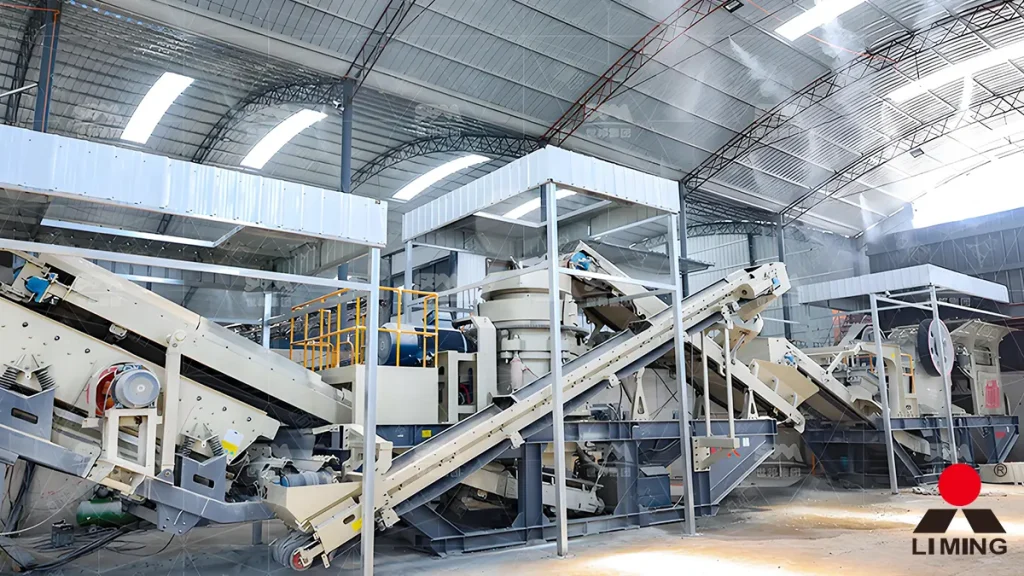
When I design a layout for a mid-to-large scale demolition contractor aiming for roughly 150 to 250 tons per hour, I prefer a two-stage wheeled setup. Wheeled plants are highly practical because you can just hook them up to a standard prime mover truck and drag them to the next demolition site when the job is done.
Here is the exact machinery setup I usually recommend from the MK series:
- Primary Crushing: The MK90J Mobile Jaw Crusher. Before we can shape the material, we need to break down the massive chunks of foundation and pillars. The MK90J features a rugged PE900X1200 jaw crusher. It has a massive feed opening (750mm max feed) which means the excavator operator doesn’t have to waste time breaking the slabs down with a hydraulic hammer. It can handle up to 320 tons per hour, effortlessly chewing up the bulky concrete and snapping the internal rebar.
- Secondary Crushing & Screening: The MK1213I-2M Two-seat Mobile. This is the real workhorse of the recycling line. The crushed material from the jaw is fed directly into this unit. It houses a CI5X1213M impact crusher paired directly with a 3SKX1860 vibrating screen on the exact same chassis. The impactor shatters the remaining concrete and strips the rebar perfectly clean. The built-in 3-layer screen then grades the material into usable recycled concrete aggregate (RCA)—typically separating it into road base, drainage stone, and fine sand. If any piece is too large, it automatically loops back into the impactor.
Why Layout and Mobility Matter
City demolition sites are notoriously cramped. You usually have a half-torn-down building on one side, active traffic on the other, and barely enough room to swing an excavator.
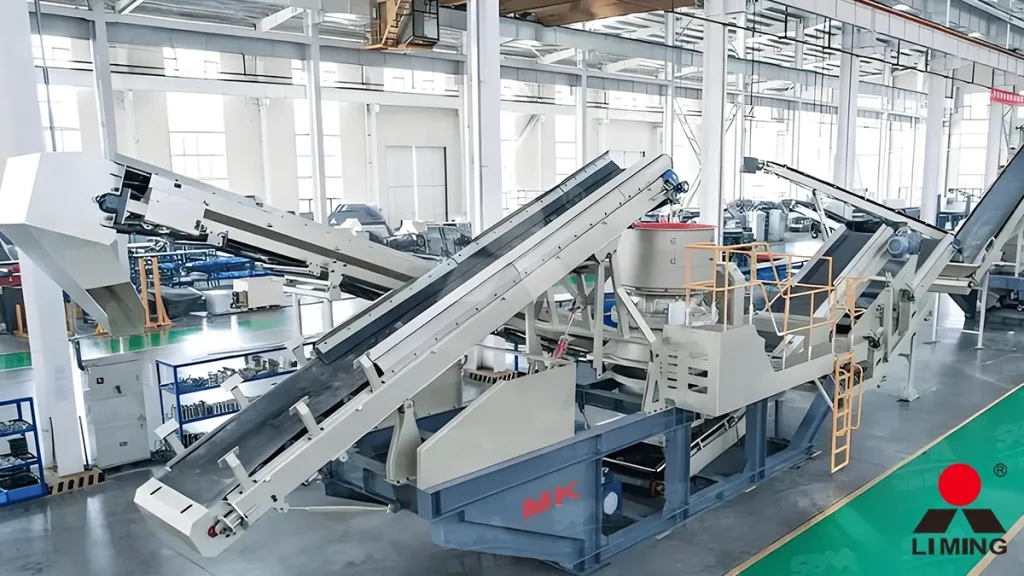
Using an integrated plant like the MK1213I-2M solves the footprint issue. Because the crusher and the multi-deck screen are mounted on a single two-seat chassis, the physical length of your production line is cut in half. You do not need to build concrete foundations, and you don’t have to run hundreds of feet of separate conveyor belts.
Final Thoughts from the Field
Recycling construction waste is incredibly profitable right now, mostly because natural stone is getting harder to permit and landfill costs are skyrocketing. But the environment is harsh on the steel and the engines.
If you are planning to set up a mobile crushing plant for construction waste recycling, do not skimp on the magnetic separator, keep your blow bars properly adjusted on the impactor, and ensure your dust suppression water sprays are always working. With a proper setup like the jaw and impactor combo mentioned above, you will be turning useless urban rubble into a highly sellable construction material day in and day out.